News and announcements

RDC Spotlight: Claudia Lutz

By Bianca Xu

In this series, meet members of the University of Illinois’ Research Development Community. Claudia Lutz is the Outreach Manager in the Carl R. Woese Institute for Genomic Biology.
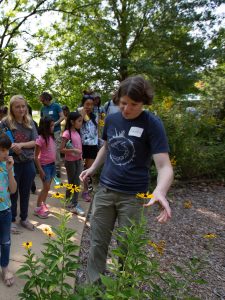
Claudia Lutz
Claudia Lutz
  1. What are your daily responsibilities?

I always find that an interesting question because every day can look different. But I think there’s a basic set of things that could be happening each day. We always try to have a portfolio of ongoing programs that allow us to offer opportunities for public engagement. What that can look like will vary throughout the year. For example, we have Science Café events and Science at the Famers Market, and other things like that, offering some sort of opportunity for engagement to different parts of our local community. We also have some programs for campus or specifically for IGB members that take more of the form of professional development.

So, depending on how close we are to those different events, some of my time would be spent making sure we have all the materials, hearing from members of the team about what needs to be purchased or activities need to be planned, developed, tested out or refined from a previous time, and making sure we have all the volunteers signed up so events can go forward. I also spent time following up on an event, hearing how it went, and maybe what we could do better next time.

  1. What motivates you to pursue this career path? Is it because of your academic background or personal interests? And how did you end up in your current role at IGB?

That’s a great question. I think that it’s both. Ever since I was a child, I’ve been fascinated by biology and other sciences, but I also had a deep interest in language and was an avid reader. As I grew older, I never realized I could find a career that merges both interests.

During my graduate studies, I chose honeybees as my subject of study. Studying bees provided a built-in outreach audience – everyone interested in hobby beekeeping loves to talk about bees. So, I had the opportunity to give talks to beekeeping clubs and other groups interested in pollinators, which helped me gain more outreach experience. And partway through grad school, I thought, “OK, I enjoy this stuff.”

So, I chose to focus on how I can keep these elements of science, learning, and communications in my career. And then around that time, IGB decided that, for the first time, they would hire a science writer to work on publications. I applied for that job and got it.

  1. What do you believe are the factors that contribute to the success and effectiveness of your role at IGB?

The biggest factor is the incredible team at IGB. We have a dedicated group of individuals, each with their unique skills, which allows me to focus on my strengths in writing and reporting on outreach events. Besides, the IGB outreach group has a unique dynamic that’s welcoming and encouraging. It’s a space where everyone is open to ideas and feedback, and we’re all approachable. This friendly and open environment is somewhat distinct from other units and departments, making it a truly rewarding place to work.

  1. What are some of the challenges you face in your role?

The biggest challenge is reaching people who do not already have an interest in science or a connection to the university. While we can host community events that draw in those who are already interested in learning, the challenge is to engage with those who might not see science as something that’s for them. This could be because they’re too busy, because it’s not on their radar, or because we haven’t made it accessible enough. There’s also a need to engage with those who might be suspicious or distrustful of scientific research due to past negative experiences. Finding ways to reach out to these people and get them engaged is difficult but crucial.

  1. What upcoming projects or collaborations at IGB are you particularly excited about?

One of our latest initiatives is the creation of a mobile science learning lab. The idea was to address the geographical limitations that prevent students in remote parts of the state from accessing the university’s resources. This mobile lab, housed in a bus donated by MTD, will bring advanced scientific equipment like high-end microscopes and PCR machines to these students. We’re currently in the process of renovating the bus into a mini-lab with plans to install solar panels for power and receive donations of scientific equipment. Once complete, we’ll be setting up a visit schedule with schools around the state, providing these students with hands-on experiences that they might not otherwise have access to.
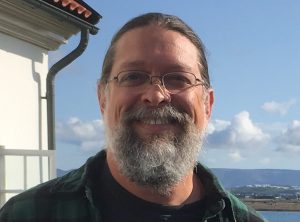
RDC Spotlight: Jason Mierek

Jason Mierek

By Bianca Xu

In this series, meet members of the University of Illinois’ Research Development Community. Jason Mierek is a project manager in the National Center for Supercomputing Applications. 

1. What was your path to your current role on campus? 

So well, my story, my gosh, I’ve been here on the campus for 18 years and am working on my 19th year. I have an academic background in the humanities. I taught religion and philosophy at Parkland College for 10 years while also being an office manager at U of I. I’ve always been kind of good at keeping things organized. In 2014, I was hired as a project manager for Humanities Without Walls. It’s a consortium of 16 universities, humanities centers, or colleges of liberal arts. 

HWW has two functions, and one of those is research development oriented — we were teaching other people how to apply for our grants and how to write budgets. In the end, I would receive about 40 reports from various principal investigators and their teams, that I would then synthesize and come up with a report to our funder on how we were spending their funds in support of all these faculty spendings. I did it for seven or almost eight years, so I have a lot of experience with research development. 

In 2020, I got into the research development community. Then I left HWW and entered the world of NCSA, where my experience came in, and I became a project manager. 

2. What does your day-to-day look like? 

I work with the proposal development office at NCSA. Once you open the box called proposal development, you discover that inside, there’s a bunch of smaller boxes: the pre-award box, and the post-award box, and all of these different components of what we call research development. For example, the application process for a grant or fund is what we call pre-award. After you get the grant, what do you do with that? That’s what’s called post-award. I help researchers do their jobs in all these boxes. It’s managing multiple things simultaneously.  

Right now, I’ve got one project with the Mayo Clinic where I primarily take notes. I am the long- and short-term memory for projects; if I had to summarize my job in one sentence, that’s it. I keep the notes, and I organize stuff. They’re publicly available, but folks rarely check the notes. So, again, I’m the collective memory for whatever projects we’re on. 

3. What do you enjoy about your current position? 

NCSA is a wonderful place to make connections with industrial partners like the Mayo Clinic, Caterpillar, and Syngenta. They’re working on transgenic crops, software pipelines for tumor analysis, and stuff like that. 

I’m not an expert in any of these things. I’m not a coder. I’m not a cancer researcher. Instead, I’m the glue that holds all the conversations together. Like an electronics transformer, I can step down the voltage, communicate, and then back up into the other receiver. I hold things together — I’m a professional juggler. I know how to keep lots of things in the air and keep my eye on all of them at the same time. 

That just comes back to taking lots of notes. And having posted notes all over the place, having whiteboards all over the place, or just having mnemonic devices to remind me of things — “Oh, yeah, don’t forget, you have to do this.” 

4. What would you advise someone who is searching for job opportunities? 

Remember, it is not the last job you’re going to get. I guarantee you even if you find the perfect job, the job will change like everything else in this world. It’s not perfect, and things are constantly changing. So, you’ll land on what you think is your target, and then life keeps moving, and you need a new target, which is fine. 

My advice would be to recognize that the things that you think will be perfect, they probably will reveal themselves not to be, and the things that you think are horrible, oftentimes will reveal themselves to be a kind of secret presence: “Oh, wow, I’m discovering things here that I can take with me to my next job.” 

RDC Spotlight: Maggie Berg

Maggie BergBy Jailene Aguirre

In this series, meet members of the University of Illinois’ Research Development Community. In this RDC Spotlight, get to know Maggie Berg, a development manager within the Interdisciplinary Health Sciences Institute.

  1. What does your day-to-day look like?

That is a tough question because my day-to-day varies so much. Currently, a lot of my time is focused on planning for the Emerging Research Leaders Academy, a new leadership development program for mid-career faculty. This has been in the works since 2019 and I am excited for it to launch this fall. Many of my RDC colleagues across campus are collaborating with us to finalize the workshop content and it’s been great to work with all of them and incorporate some fresh ideas into the program.

I also recently worked with the IHSI Research Development Team to write and submit an NIH grant proposal to support IHSI’s Community-Academic Scholars program. This was the first NIH proposal in which I played a key role in the entire process — from planning through submission. I was grateful for all the NIH knowledge I have picked up after many years of running the NIH Grant Writing Series.

I also like to keep up with funding trends and new opportunities for Illinois researchers. For example, I have been keeping a close watch on ARPA-H and thinking of ways to facilitate new collaborations and project ideas for that agency.

  1. What do you enjoy about your current position?

I enjoy getting to know many different people and learning about their research. I also love developing new programs and getting new initiatives off the ground. I like having new challenges to keep me on my toes — it keeps the work interesting!

  1. What was your path to your current role on campus?

I have been at UIUC a long time. I started as an undergraduate in animal sciences in 2000 and stayed for my M.S. and Ph.D., which were both done in the microbiology division of animal sciences.

During my postdoc, my advisor became the director of the Mayo Clinic & Illinois Alliance and needed a program coordinator. He knew I was interested in moving into a career away from the bench and asked if I wanted to work half-time with the Division of Biomedical Sciences (the precursor to IHSI) to manage the Mayo Alliance. That experience eventually led to my full-time research development position at IHSI in 2015.

I have supported a few different program areas since, including Precision Medicine and Maternal and Child Health. I now lead the IHSI Research Development Core, which provides proposal development support and develops faculty development and grant seeking training programs. Additionally, I work closely with the Microbial Systems Initiative leadership to facilitate collaborative research in the microbial sciences through workshops, networking events, and a monthly research community newsletter.

  1. Are there particular experiences or mentors that shaped your career?

I had great mentorship from Jennifer Eardley, who provided much insight and wisdom as I was starting my research development career. I would have been completely lost without her guidance! Becoming more involved with the National Organization of Research Development Professionals and expanding my professional network has also had a huge impact on my career. I have learned so much from my NORDP colleagues and it’s been reassuring to have the support of that community.

  1. What are your interests and hobbies?

I enjoy dancing, singing, cooking, and playing board games with friends. I also teach fitness classes at Defy Gravity Pole Fitness and Aerial Arts Studio.​

RDC Spotlight: Meg Dickinson

Meg DickinsonBy Nicole Godellas

In this series, meet members of the University of Illinois’ Research Development Community. Meg Dickinson is executive director of communications at the Beckman Institute for Advanced Science and Technology.

  1. What does your day-to-day look like?

My job is a fun mix of setting strategy and doing marketing and communications work. I supervise five full-time staff members who are generating news stories and videos, managing digital signs, designing and building websites and other communications materials, and setting and executing outreach strategy. Several of those staff members supervise student employees.

I also do a lot of writing, especially for websites, email communications, and marketing pieces. I serve on Beckman’s leadership team, and work hard to maintain relationships with colleagues in our faculty members’ home departments, OVCRI, Strategic Communications and Marketing, and more.

On a daily basis, you might find me:

  • attending meetings with any of the people I mentioned above
  • answering questions or assigning projects to the communications team
  • blocking calendar time for writing or updating the Beckman website
  • supporting special events
  • ordering and distributing print materials
  • getting out of my office to experience Beckman’s diverse, interdisciplinary community
  • copy editing a variety of materials related to Beckman. Give me a red pen and I’m happy!
  1. What do you enjoy about your current position?

The Beckman Institute is magic. All our researchers are here because they want to be. They enjoy appreciative colleagues across disciplines, cutting-edge research tools, and exceptional staff members who support their unique needs.

I never know what kinds of things our office will be involved in. I get emails like, “We have bearded dragons in our 9.4 Tesla MRI. Want to come take pictures?” or “Can you give the Speaker of the Illinois House a tour?” or, “Can you help with communications for a project that will help people with disabilities better use speech recognition technology?”  (The answer was an enthusiastic yes in all cases.)

My biggest accomplishment in four years has been retaining, attracting, and growing an amazing team. They make Beckman shine.

  1. What was your path to your current role on campus?

I started as a print journalist, which taught me about writing concisely, telling stories, building relationships, and working quickly and accurately. I spent seven years on various beats, and the last one was K-12 education. I sat through a lot of school board meetings and wrote about property taxes. I also discovered a passion for telling technology-related stories, like when campus researchers would visit schools with their drones.

My first stop on campus was in the Department of Electrical and Computer Engineering, where I loved writing about research and scientific advances. I also supported the department’s advancement office, which was invaluable experience. My next stop was in the College of LAS, where I managed social media, overhauled a website, and did a ton of student recruitment work.

I applied to work at Beckman because of a long family history (my dad helped dig the basement when I was a baby!) and because, as previously mentioned, it’s magic. It combined what I learned about tech research in ECE with navigating a huge, complex organization like LAS. I can’t imagine spending the last four years anywhere else.

  1. Are there particular experiences or mentors that shaped your career?

I’ll always be indebted to my first News-Gazette editor, the late Becky Mabry. She talked the paper into hiring me just as the Great Recession hit. Her high expectations shaped me as a young professional.

It took me a long time to get hired on campus, and not all my skills transferred directly. I’m grateful for campus communications leader Brad Petersen, who was my supervisor and teacher in both ECE and LAS. I came in as a writer and he taught me to be a strategic communicator and marketer.

Former Beckman director Jeff Moore hired me to my current role, and I am still astounded by him. He’s a superstar in his research field, but I’ve never met anyone so humble and eager to consider new perspectives. He gave me a master class in leadership.

Today, I value the mentorship of Melissa Edwards in OVCRI. She started as a communicator and is now doing so much more. I want my career to emulate Melissa’s!

Finally, I loved almost every minute of my time pursuing a master’s degree in library and information science at the iSchool. Journalism tends to become one’s identity, and I lost it when I changed careers. The iSchool reflected so many things I value – freedom of information, accuracy, and good usability.

  1. What are your interests and hobbies? Tell us a little bit about yourself outside of your position!

I have two young children and spend as much time possible with them. I enjoy the endorphin rush of exercise and feel most like myself when walking my dog, Sunny. I read fiction voraciously, love doing puzzles, and write a cooking column for The News-Gazette called Meg Makes. I especially love to volunteer with organizations related to professional development. I’m currently serving on the United Way’s Emerging Community Leaders at Illinois program and am a past board member for Executive Club of Champaign County.

Four Career Exploration Fellows Learn about Research Development

Group photo of career fellows
Career Exploration Fellows (left to right) Lesley Owens, Yukun Yu, Jailene Aguirre, and Bianca Xu

Four Graduate College Career Exploration Fellows spent the spring semester learning about research development at UIUC.

The Career Exploration Fellowship allows doctoral students to participate in mentored work experiences with campus units, learning about alternative careers beyond the traditional academic tenure track, while contributing to projects in their host units.

Fellows who learned about research development included:

  • Jailene Aguirre, a fourth-year student in human development and family studies. Jailene worked with the Office of Proposal Development. She met with a range of research experts and proposal developers within the Interdisciplinary Health Sciences Institute, Center for Social & Behavioral Science, College of Applied Health Sciences and the Office of the Vice Chancellor of Research and Innovation. She learned about their jobs, career paths and day-to-day experiences. Jailene’s learning activities included deep dives into federal sponsors, limited submission projects, and working on an upcoming proposal with an RD professional.
  • Yukun Yu, a fifth-year doctoral student in developmental psychology. Yukun worked with the Center for Social & Behavioral Science. She contributed to various CSBS workshops and events, participated in public engagement initiatives, and assisted research development managers to support research teams on campus. Yukun also regularly met with members of her host unit to learn about different projects and discuss potential ways to advance innovative social and behavioral science research. Learn more about Yukun’s experience.
  • Lesley Owens, a fifth-year doctoral student in writing studies. Lesley worked with the REDCap team at the Interdisciplinary Health Sciences Institute. They are working to improve program tracking through REDCap follow-up surveys, as well as providing additional REDCap support to users.

    A grad student assists a middle-school student using a microscope
    Bianca Xu assists a middle-school student using a microscope
  • Bianca Xu, a fourth-year doctoral student in food science and human nutrition. Bianca worked with the Illinois Research Development Community. She met with RDC members from five different units on campus to learn about research development jobs and career paths. She met regularly with the RDC Executive Committee as well as the Membership Subcommittee. Her projects included setting up a database in REDCap for the RDC Member Survey, working with the OPD fellow to develop materials and review applications for a limited submission funding opportunity at the campus level, developing an interactive graphic for the RDC website, developing and implementing an outreach activity for middle-school students from Urbana, and supporting development of a large research project focusing on carbon capture.

RDC Spotlight: Gill Snyder

By Sneha Das

In this series, meet members of the University of Illinois’ Research Development Community. Gill Snyder is the senior director for research and core development at the Interdisciplinary Health Sciences Institute.

1. What does your day-to-day look like?

One of the things I love about my job is that every day is so different, and it never gets boring! During my work week I typically focus on three things.

Firstly, what do my teams need from me? I have five different teams that report to me, and we meet bi-weekly. But we also go back and forth on Microsoft Teams a lot to chat about ideas, challenges and requests that come in. My No. 1 goal is to make these teams successful!

Secondly, what do the other leaders at IHSI need from me? We have a five-person leadership team that spans our entire institute, and we might chat as little as a few times a week, or multiple times a day, depending on what our priorities are.

Lastly, what does campus need from me? I have been lucky enough to have worked with so many units across campus, as well as sit on various committees, including the Research Development Community Membership Committee. The relationships that I have forged through these experiences have led to a tremendous amount of brainstorming and project development. I typically have at least one idea/project on the go with colleagues from across campus!

2. What do you enjoy about your current position?

The main goal I have set for myself in this current position is to make other people successful. Whether that is my staff, others at IHSI, or faculty and colleagues across campus. I enjoy the challenges that this brings and appreciate seeing when I have made an impact on someone’s time at Illinois, no matter how big or small that is.

3. What was your path to your current role on campus?

It has been a winding road for sure! I never imagined myself in this career, but now I can’t imagine doing anything else. During my first postdoc, I started to have doubts about becoming a faculty member; it seemed like I would have to sacrifice so much of my personal life for my career. I took a second postdoc, which brought me to Illinois, and used this time to decide. While I was interviewing for faculty positions, I was also talking with my PI and others about alternative opportunities.

RD wasn’t really a thing at Illinois at that time, and while I knew that I wanted to stay in academia, I wasn’t sure how to make it work. An opportunity then came up for a 50% senior postdoc role for a large multi-PI, multi-year project. Instead of doing the research and analysis, I was helping to oversee the administration and operations of the grant. This was a game changer for me; I grew more confident in my decision to stop applying for faculty positions and instead started to look for something that was in a support role instead.

About a year later I started at the IHSI, and I haven’t looked back! First, as a research development professional supporting the neuroscience community, before becoming a leader overseeing five research cores. I’m grateful that the campus has really embraced RD and look forward to seeing where we take this!

4. Are there particular experiences or mentors that shaped your career?

I consider myself fortunate to have had several mentors that have helped shape my career and am lucky enough to continue my relationship with them even after they left Illinois. Most recently, my current mentor has said something to me that has really helped shape how I think about and approach my career moving into 2023 and beyond. It is a long game – read that again – it is a long game.

I have often felt that I need to accept every opportunity, apply for every new position that might help me move up in my career, but there is something to be said for slowing down, taking time to really settle into a role, and soaking up everything that you can before moving onto your next position.

5. What are your interests and hobbies? Tell us a little bit about yourself outside of your position!

I love to read, mostly crime/thrillers, and have a very long list of books on my wish list at my local library. In the last year I have also really gotten into podcasts, I find hearing people’s stories captivating. Travel is also high on my list; I only wish I got to do it more.

Finally, advocacy and I am part of a support group for those who have experienced miscarriage, still birth or infant loss. I can’t imagine a more worthwhile way to spend my time than walking beside someone as they experience this kind of loss.

RDC Spotlight: Herbert DaCosta

By Nicole Godellas

In this series, meet members of the University of Illinois’ Research Development Community. Herbert DaCosta is a research development manager in the Office of Proposal Development.

1. What does your day-to-day look like?  

I assist the Illinois research community in the development of large and multidisciplinary grant proposals. This involves various types of activities, including project management and proposal development activities.

Project management may include tasks such as:

  • Coordinate teams involving faculty members and staff from various departments/units and sometimes from multiple universities;
  • Develop timelines and lists of tasks to be accomplished by the various team members;
  • Communicate with team members about their tasks and progress towards deadlines.

Proposal development activities include:

  • Writing drafts of components of the proposal package, such as data management plan,
    management plan, description of facilities and equipment, ethics plan, letters of collaboration, methods to enhance reproducibility of research, training on the responsible conduct of research, and more;
  • Editing files such as the project description/narrative and project summary;
  • Collecting and editing personnel files such as biosketches, lists of collaborators, and lists of funding support.

2. What do you enjoy about your current position?  

I enjoy helping the Illinois research community in reaching its goals. I share the viewpoint that no matter my job title or particular duties, I always work with the customer service mindset, whether that be internal or external customers. I also like the fact that I am always learning something new with each project that I assist on, which in turn helps me become better in my position.

3. What was your path to your current role on campus
I obtained two doctoral degrees (the first in chemistry, and the second one in chemistry, with minors in physics and computer engineering) and did two postdocs. After that, I worked in industrial research and development. However, I realized that I liked writing more than working in research and development. I then learned that I could combine my science skills and my interest in writing into a single career path — now known as research development. I took a position as the only pre-award person in a small college. That was the perfect training for my current OPD position at Illinois, which I started in 2017. As part of my continuous development, next year, I plan to finish an M.S. in Journalism here at Illinois.

4. Are there particular experiences or mentors that shaped your career? 

I learned something from every experience and every person with whom I’ve interacted with over the years. Along the way, many people have served as mentors, even though they might not have realized it.

5. What are your interests and hobbies? Tell us a little bit about yourself outside of your position! 

I like reading, running, and playing soccer. I played competitive soccer in high school, ran track in college and part of graduate school, and then came back to soccer later as I finished graduate school. And, now, I have gone back to running ever since my time as a postdoc.

RDC Spotlight: Wendy Bartlo

By Sneha Das

In this series, meet members of the University of Illinois’ Research Development Community. Wendy Bartlo is assistant director for strategic initiatives and research relations in the College of Applied Health Sciences.

 1. What does your day-to-day look like?

Every day is a mix of activities and looks a little different for me. I do a lot of different tasks to support

Wendy Bartlo

the research mission of AHS. Some days I am working on organizing events or seminars for faculty or research symposia. Other days, I am working with teams to develop Investment for Growth proposals, meeting with colleagues from across campus to connect our faculty with partners and resources, meeting with community partners about potential projects and programs, or meeting with college leadership for strategic planning. I track research metrics and draft reports for college leadership. I also run an internship program for undergraduates and guest lecture in AHS classes.

2. What do you enjoy about your current position?

I feel very connected to the AHS mission to improve quality of life for people across the lifespan. I really enjoy that I get to work on a lot of different projects and with a lot of interesting people.

3. What was your path to your current role on campus?

My academic background is in anthropology. I started my career in museums as an educator at the Chucalissa Museum at the University of Memphis. After graduating with a M.A. in applied anthropology, I took a job with a team of social scientists at General Motors R & D. One of the projects I worked on there was a program evaluation of health and wellness programs for retirees, which sparked an interest in gerontology. I returned to graduate school to do a Ph.D. in anthropology and a predoctoral fellowship at the Institute of Gerontology at Wayne State University in Detroit. My dissertation was about older adults and placemaking in Detroit neighborhoods. After my family relocated to Champaign-Urbana, I joined the Center on Health, Aging, and Disability where I have worked since 2016.

4. Are there particular experiences or mentors who shaped your career?

I’ve had a lot of wonderful mentors throughout my career who were generous with their time and had a lot of patience for me. My master’s advisor Dan Swan helped me develop as a professional and taught me how to write a cover letter for a job. My first boss out of my master’s program, Elizabeth Briody, was a technical fellow at General Motors R & D. She taught me so much about doing ethnographic research and being brave in the field. The faculty in the Anthropology Department and the Institute of Gerontology at Wayne State University, who helped nurture my curiosity and critical thinking skills. When I first came to Illinois, my now-friend Kathy Partlow from the ACES Office of Research took me under her wing and introduced me to the term “research development.”

5. What are your interests and hobbies? Tell us a little bit about yourself outside of your position!

I love to spend time with my family and dog. I am also an avid reader of fiction and every year I have a goal to read at least 52 books.

RDC Career Exploration Fellow recognized as outstanding graduate student

Congratulations to the 2022 Research Development Community Career Exploration Fellow Nicole

Nicole Godellas

Godellas on receiving the School of MCB Outstanding Graduate Student Award in December 2022.

Nicole was recognized for her research and service, including the contributions she made during her fellowship appointment. During fall 2022, she worked with campus leadership from the Beckman Institute, Office of the Vice Chancellor for Research and Innovation, Office of Proposal Development, and RDC on a variety of projects to support the UIUC research enterprise.

Leveraging her experience from the Career Exploration Fellowship, Nicole organized a career development seminar for her department in the fall of 2022, as well. Congratulations Nicole!

RDC Spotlight: Richard Sallee

By Nicole Godellas

In this series, meet members of the University of Illinois’ Research Development Community. Richard Sallee is a research development coordinator in the Office of Proposal Development.

1. What does your day-to-day look like?

Each day looks a little bit different for me. However, my main responsibility on campus is managing the limited submissions process. This entails searching for opportunities, crafting announcements and review materials, and communicating with multiple campus units. I spend much of my time in communication with faculty, staff, and UIUC leadership discussing a wide

Richard Sallee

 range of topics and strategies to support limited submissions.


2. What do you enjoy about your current position?

I truly enjoy interacting and working with the many different units on our campus, as well as building a rapport with both administration and faculty members. I also enjoy reading a variety of proposals from different disciplines. It is always intriguing to see what the next big idea is, whether it is an advancement in energy, health care, or even basic science. What makes these cutting-edge proposals even more compelling is the fact that most come from our young faculty members.


3. What was your path to your current role on campus?

I am a graduate of UIUC with a background in English. I worked in Chicago for a few years in health care programs where I built trainings and assessments for trauma nurses and doctors. I became tired of the 12 to 14 hour days, the constant travel, the poor leadership structure, and the little room for advancement. At the time, my fiancé (now wife) was finishing her master’s degree

 and was offered a great employment opportunity at UIUC. So, we decided to move back to Champaign. I took a job in the Department of Chemistry to act as extra help for their HR team, which opened my eyes to a small part of the UIUC system. Then, I was fortunate to get a position for a new office at UIUC called the Office of Proposal Development (OPD). At the time, I did not have experience in funding or research administration, let alone proposal development. I remember the first time that I read a Funding Opportunity Announcement (FOA) for the NSF Major Research Instrumentation (MRI) Program and literally said, “Wow, this sounds cool!”


While working for the OPD, there was turnover of staff and realignment of campus needs. I was lucky to both see, and ultimately fill, a void in the limited submissions process. I received helpful feedback from a variety of campus leaders and have been able to build and shape UIUC’s limited submissions process. I understood what leadership wanted, what the campus needed, and how I could contribute to this new process. Today, I am still learning and reshaping this process and have done so with great support from UIUC leadership. 


4. Are there particular experiences or mentors that shaped your career?

The path to my current position wasn’t always easy. When I came to UIUC, I was in a new office and had just changed careers to take a completely different approach. At the time, all I could do was learn as much as I could, as quickly as I could. I took advice from good people while trying to do my work as best as I could. I truly believe that everything will eventually work out if you work with people who value you, for who you are, and at the same time, you do your part by doing the best work that you can. For me, it took some time, but everything began to fall into place. I have had the pleasure of working in a great office with Susan Martinis and Melanie Loots at the helm. Their passion, knowledge, and spirit permeated throughout the office environment and kept me going. Most recently, I have worked directly with Melissa Edwards and Sowmya Anand. Both have provided me with supportive mentorship, and it has truly been a great experience. They encourage and teach with authenticity, in a manner that allows and motivates me to do more.


5. What are your interests and hobbies? Tell us a little bit about yourself outside of your position! 

I am a football-loving, anime-watching, MCU (Marvel Cinematic Universe)/Star Wars super nerd. I love going to movies and going on walks with my wife and daughter. And, I am team Dunkin over Starbucks.

Research Development Community
OVCRI, Fourth Floor, Swanlund Administration Building
601 E. John Street
Champaign, IL 61820
Email: ovcriwebmarketingsupport-group@office365.illinois.edu
Log In